Kawasaki GPZ 900R Restoration: Rebuilding the Top Gun Bike
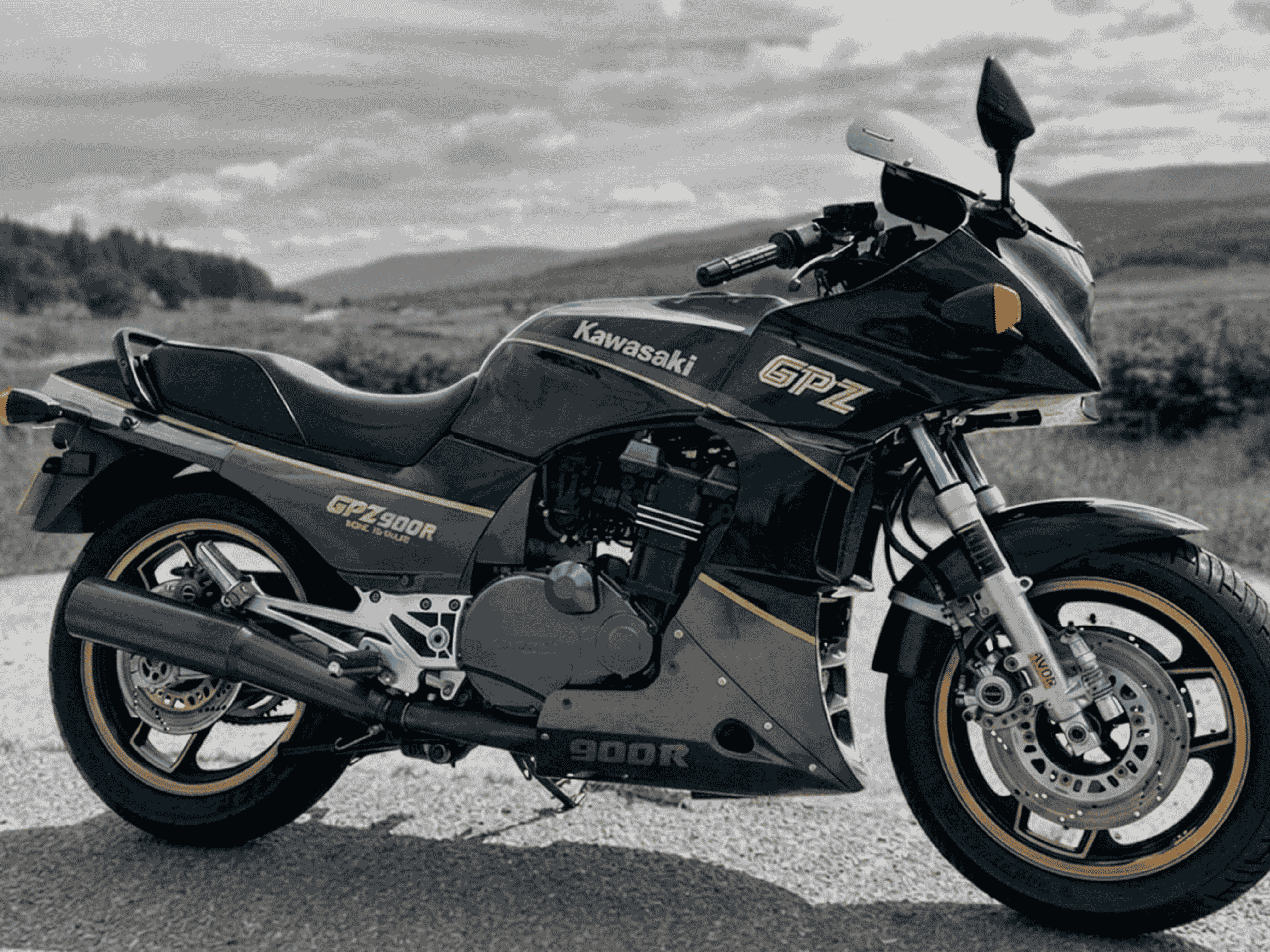
A 14 month Kawasaki GPZ 900R restoration, start to finish. This is the bike Tom Cruise made famous in Top Gun, and this particular matching numbers example came into the workshop unloved, tired, but with the bones worth saving. Here is how we approached it, and the eight stages we work through on any classic motorcycle restoration of this calibre.
The black GPZ 900R you can see in the photos had seen better days. Paint tired, fairings cracked, looms hacked about by previous owners, but the engine numbers matched the frame and the core of the bike was honest. That is the starting point for any worthwhile classic Kawasaki restoration. A matching numbers GPZ900R is getting harder to find, and the Top Gun connection means the market for a properly restored example is still strong.
What follows is the process we use on the bench for restoring a GPZ 900R, or any classic muscle bike of that era. Eight stages, in order, no skipping.
The 8 stages of restoring a Kawasaki GPZ 900R
Stage 1. Do your research before you spend a penny
Join the forums. They are invaluable for knowledge gathering on any classic motorcycle restoration, and the GPZ 900R community in particular has owners who have been with these bikes since the eighties. It is always advantageous to know as much as you possibly can about a bike you are ultimately going to rebuild better than the factory did in the early eighties.
The harder question to answer at this stage is the commercial one. Is it actually worth restoring to sell on? Is there a market for this particular model, in this particular condition, at the price you will end up at once parts and time are accounted for? You do not want to spend a year or so restoring a bike only to have it lay up in the back of your garage collecting dust.
Stage 2. Find and buy a good bike to start with
This is not an easy undertaking. A good GPZ 900R at a reasonable price, that is genuinely worth restoring, takes patience to find. Walk away from anything with frame damage, mismatched numbers, or evidence of a serious off. A tired bike with honest history is worth more than a tidy bike with hidden problems.
Stage 3. Get it running in its original clothes
Getting the GPZ 900R running and getting everything working, as far as possible, while it is still in its original clothes, is critical. Diagnosing and fixing issues is so much quicker when everything is still on the bike and connected as the factory intended.
This particular GPZ only took a couple of hours. Fresh oil and fuel, a new battery, new ignition coils, and it started up long enough to check the charging system was working and that 90% of the electrics were live. The engine sounded good, running on all four cylinders, just lacking a good service. That is the baseline you want before you take a single bolt out.
Stage 4. Stripping down the bike
This can be quite a task. Rusty screws and bolts, cracked plastics, hacked wiring looms. My advice would be to take lots of photos as you go, and bag and tag everything that comes off the bike. It is labour intensive but it makes life much easier in the long run.
Make space for storing all your components. You would be surprised how much there is on an old muscle bike like the GPZ 900R, and a restoration that stalls because parts have wandered off into different corners of the garage is a restoration that does not finish.
Stage 5. Recommissioning every component
As you can see from the photo, every single component was removed to leave the bare frame, which was then blasted and powder coated. I tend to recommission every single component myself, from the brake callipers, to the suspension components, to full engine rebuilds.
This particular GPZ 900R had a new crank and pistons fitted, only because of the mileage (66,000 miles) and because I found the parts for sale at a very reasonable cost. Engine rebuilds on a GPZ900R are not cheap if you have to chase parts, so when the right bits come up at the right price, you take them.
Stage 6. Keep it original
A key part of restoring a classic bike is to keep it original as much as possible. So rebuild the original parts, and use the original bolts. Kawasaki used a 4 or 7 stamped on the bolt heads depending on size, and this may seem a bit mad to care about, but keeping it original is important. There are plenty of suppliers out there with NOS Kawasaki parts available if you put the work in to find them.
Stage 7. Be patient
Finding the correct parts takes time. This GPZ 900R restoration took 14 months start to finish, and most of that was waiting and locating the right parts. I had to go to Japan for a genuine fuel tank and silencers, for example. The correct genuine fairings came from about four different bikes and all kinds of colours, before I repainted them in the black, anthracite and gold scheme you can see on this bike.
The bike is finished when the bike is finished. Setting a deadline on a classic restoration is the quickest way to end up with the wrong parts on it.
Stage 8. Ride the thing
This bike is 40 years old and it rides like old muscle bikes are supposed to ride. It has all the character it has always had, but with a few small suspension changes it handles better than it ever did from the factory. It needs rider input to get the best out of it, absolutely no electronics apart from an upgraded ignition system. That is the whole point of a GPZ900R, and it is why these bikes are still worth restoring properly.
Thinking about a classic Kawasaki restoration?
If you have a GPZ 900R, GPZ1100, ZRX, or any classic Kawasaki sitting in a garage and wondering whether it is worth bringing back, get in touch. Happy to have a look at it, give an honest opinion on whether it is a restoration project or a parts donor, and talk through what a proper job would involve. See more of our restoration work here, or drop us a line at the workshop.